

History Lab
The series
At History Lab we’ve got some good stories to tell
But we are interested in much more than just the story. Instead of an academic or other expert telling you what to think, History Lab wants to draw you in to the investigative process. It wants you to come along with us as we try to make sense of the traces the past leaves in the present. You’ll find that this can sometimes be confusing and frustrating: records are patchy, evidence is destroyed and a lot of the time people disagree about what happened and what it means.
But more often than not, trying to make sense of the traces of the past is also pretty exciting. Things are not always what they seem. Aren’t we always in the process of finding that out? Come and join us, as together we try and make sense of the big and little questions all around us.
Podcast playlist
EPISODE 4
Darlinghurst’s AIDS Crisis: Bonus episode with Leigh Boucher and Tamson Pietsch
In this bonus episode, History Lab’s Tamson Pietsch speaks with historian Leigh Boucher about the making of Darlinghurst’s AIDS Crisis — our three-part History Lab series exploring one of the most intense and concentrated episodes of loss, activism, and community life in Australian history (if you haven’t listened yet, go to episodes 42-44 of History Lab).
Leigh is an historian based at Macquarie University who has lived in Darlinghurst for years. Walking the streets of the neighbourhood every day, he found himself asking a question the existing histories hadn’t quite answered: what did it actually feel like to live in this neighbourhood as the epicentre of an epidemic? The series was his attempt to find out.
Here, Leigh describes the tension between oral history practice — open-ended, associative, unhurried — and what podcasting demands.
Leigh also reflects on the way his research, his interviewees and the collaborative work of making the podcast were able to complicate the story of how AIDS played out in Australia – zooming in to the local experience, and listening to voices that can help us hold that complexity rather than resolve it.
Voices
Leigh Boucher and Tamson Pietsch, presented by Regina Botros.
Credits
Recorded by Siobhan Moylan, edited and mixed by Regina Botros.
History Lab is a UTS Impact Studios production, in collaboration with the Australian Centre for Public History at UTS.
Support
This series of History Lab was made with the support of the support of the Paul Ramsay Foundation and is part of the Foundation’s Darlinghurst Public History Initiative, a collaboration with UTS’ Australian Centre for Public History and Impact Studios.
Thanks to Macquarie University for its support of this series.
A special thanks goes to the staff and management of City Gym, Darlinghurst, for their generous hospitality. Heartfelt thanks also to Anni Turnbull at the Powerhouse Museum in Sydney for her time and expertise, and to the Australian Queer Archives.
Thanks also to the National Library of Australia, the State Library of New South Wales, ACON and the Pride History Group Sydney.


EPISODE 3
Darlinghurst’s AIDS Crisis: Faultlines and farewells
By the early 1990s, AIDS had reached its devastating peak in Darlinghurst. Obituaries filled the pages of the Star Observer, funerals became routine. Sickness and loss touched almost every friendship and street in the neighbourhood.
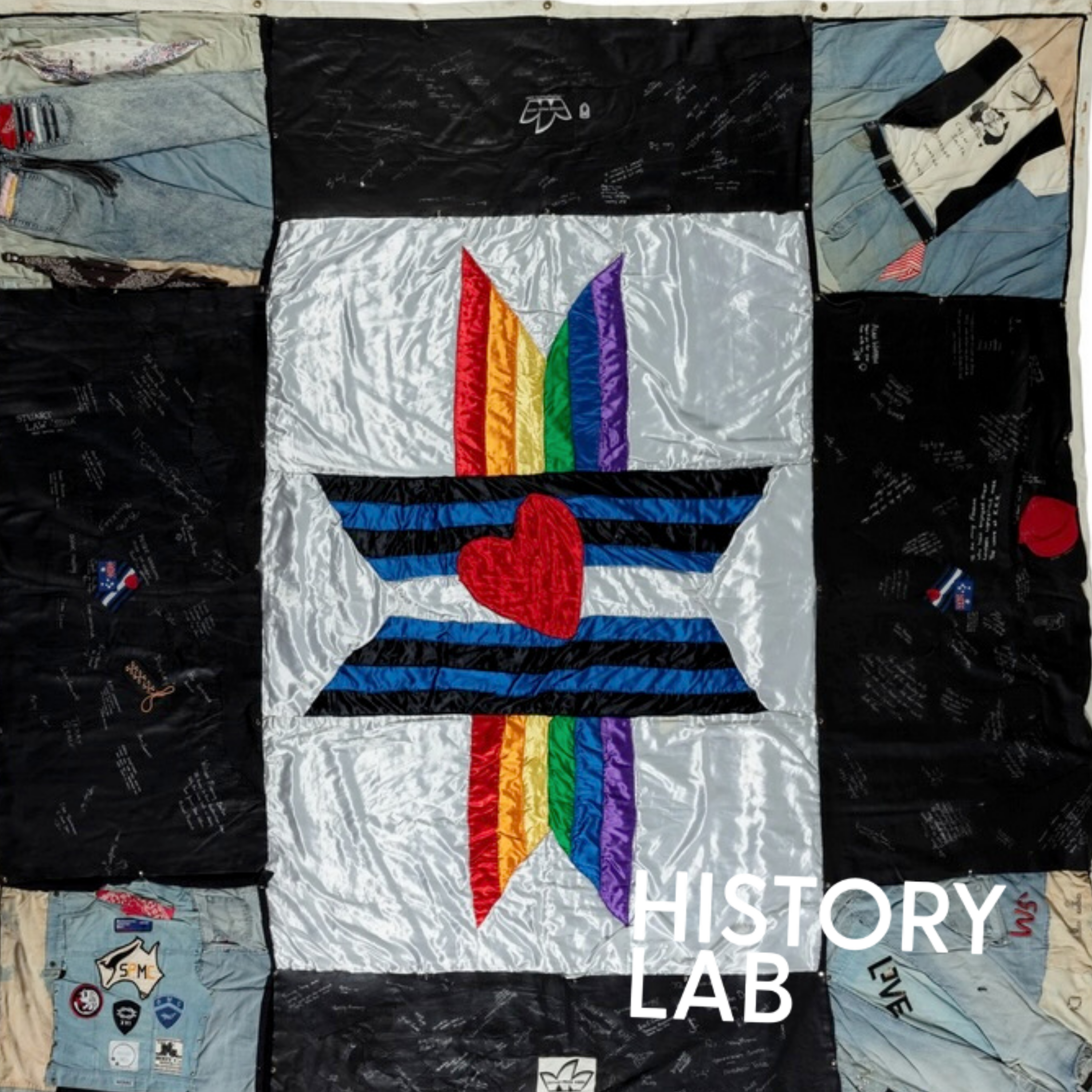
In this episode, we move inside the hospitals, hospices and homes where nurses, carers and volunteers supported a generation of young men facing terminal illness. Beyond the wards, grief and anger spilled into public life — through candlelight vigils, the AIDS Memorial Quilt, and growing activism demanding faster access to life-saving drugs.
Then, in 1996, combination therapies changed the course of the epidemic. Soon, for the first time in a decade, the Star Observer ran without a single obituary. But survival came with a new question: how do you rebuild a life — and a community — after so much loss?
This episode explores the final grueling years of the crisis and its aftermath — and the complex and unruly legacies it left for generations to come.
Voices
Narrator: Regina Botros
Historian: Leigh Boucher
Interviewees: Pierre Touma, Lizzie Griggs, Bill Patterson, Frank McCabe, Billy Kokkinos, Tim Vincent, Sara Lubowitz, Bruce Carter, Tess Ziems, Scott Petrie and Ian Innes.
Archive voice actors: Sam David Harris and Michael J Ryan.
Radio news and current affairs archive from Gaywaves, 2SER.
Credits
This special History Lab Original series was created on the lands of the Gadigal people of the Eora nation.
Produced, written and narrated by Regina Botros, in collaboration with Macquarie University historian Leigh Boucher.
Story development by Leigh Boucher and Michelle Ransom-Hughes.
Interviews by Leigh Boucher.
Research assistance from Eli Branagh.
Story and script editing by Sarah Gilbert.
History Lab is a UTS Impact Studios production, in collaboration with the Australian Centre for Public History at UTS.
Support
This podcast was made with the support of the support of the Paul Ramsay Foundation and is part of the Foundation’s Darlinghurst Public History Initiative, a collaboration with UTS’ Australian Centre for Public History and Impact Studios.
Thanks to Macquarie University for its support of this series.
A special thanks goes to the staff and management of City Gym, Darlinghurst, for their generous hospitality. Heartfelt thanks also to Anni Turnbull at the Powerhouse Museum in Sydney for her time and expertise, and to the Australian Queer Archives.
Thanks also to the National Library of Australia, the State Library of New South Wales, ACON and the Pride History Group Sydney.
Further reading
To learn more about the history and complex legacies of AIDS in Darlinghurst, read these articles by Leigh Boucher:
Reciting the names of the dead: how Australia’s response to HIV/Aids was emotionally – and politically – powerful, Guardian Australia, 1 Dec 2025.
What have we lost with 2026’s Mardi Gras Parade after party cancellation?, Star Observer, 13 Feb 2026.
EPISODE 2
Darlinghurst’s AIDS Crisis: Dancing as fast as we can
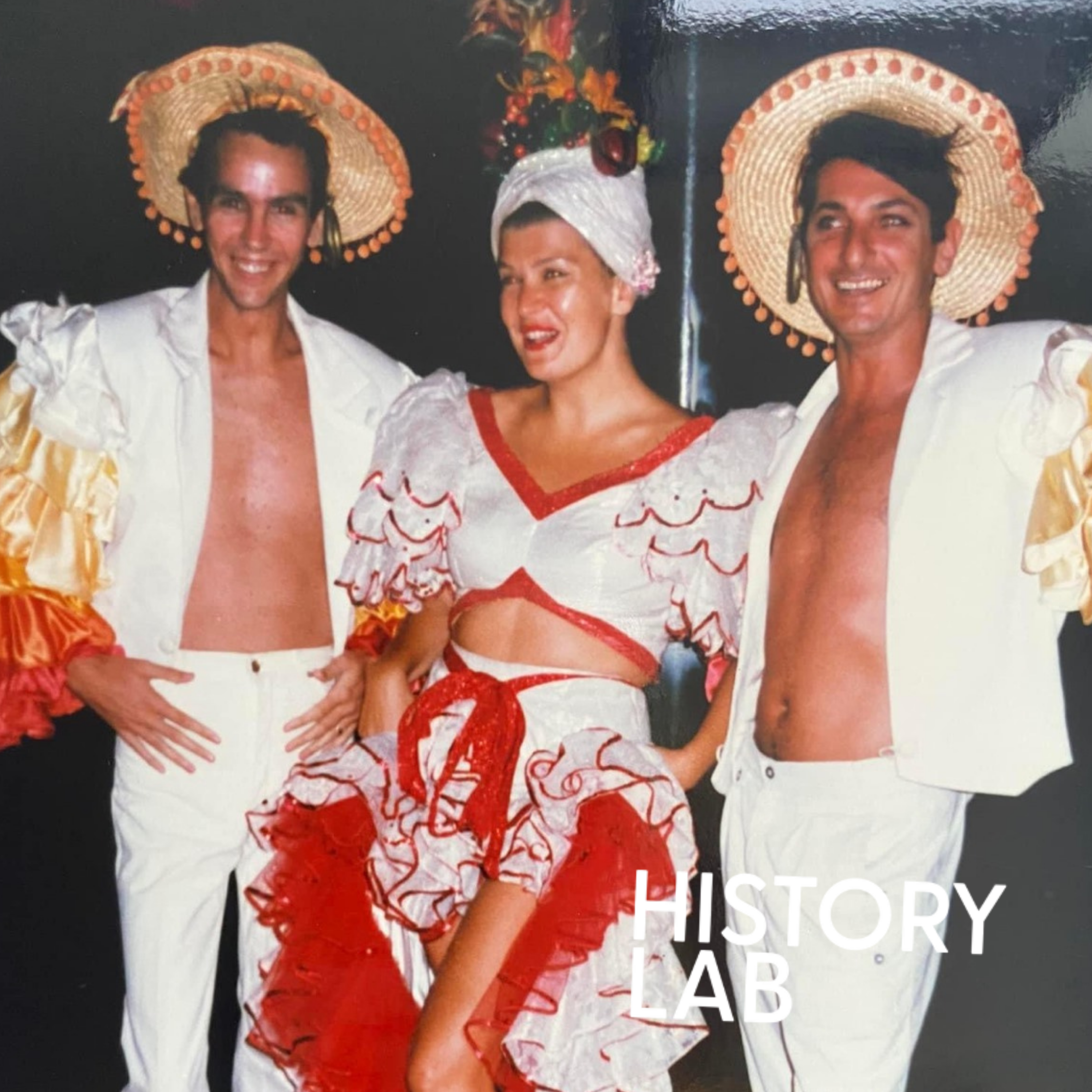
By the mid-1980s, the epidemic had taken hold in Darlinghurst. Fear was rising, homophobia was intensifying, and uncertainty shaped everyday life. Who had the virus? What did a positive test mean? And could the state be trusted with that information?
In this episode, historian Leigh Boucher moves into the heart of the crisis as the neighbourhood marshals every last drop of queer energy, love, creativity and strength to hold back the tide. Safe sex campaigns and innovative health responses proliferate – in bars, on dance floors and among squat racks.
For Peter Vincent and his friends, the party is far from over, even as they face the stark reality of a disease without a cure and the homophobic judgment beyond the gaybourhood. This is Darlinghurst – dancing as fast as it can.
Voices
Narrator: Regina Botros
Historian: Leigh Boucher
Interviewees: Bill Patterson, Lizzie Griggs, Frank McCabe, Tim Vincent, Pierre Touma, Bruce Carter, Scott Petrie and Sara Lubowitz.
Archive voice actors: Sam David Harris and Michael J Ryan.
Radio news and current affairs archive from Gaywaves, 2SER.
Credits
This special History Lab Original series was created on the lands of the Gadigal people of the Eora nation.
Produced, written and narrated by Regina Botros, in collaboration with Macquarie University historian Leigh Boucher.
Story development by Leigh Boucher and Michelle Ransom-Hughes.
Interviews by Leigh Boucher.
Research assistance from Eli Branagh.
Story and script editing by Sarah Gilbert.
History Lab is a UTS Impact Studios production, in collaboration with the Australian Centre for Public History at UTS.
Support
This podcast was made with the support of the support of the Paul Ramsay Foundation and is part of the Foundation’s Darlinghurst Public History Initiative, a collaboration with UTS’ Australian Centre for Public History and Impact Studios.
Thanks to Macquarie University for its support of this series.
A special thanks goes to the staff and management of City Gym, the Albion Centre and ACON’s Needle and Syringe Program for their generous hospitality.
EPISODE 1
Darlinghurst’s AIDS Crisis: Under the mirror ball
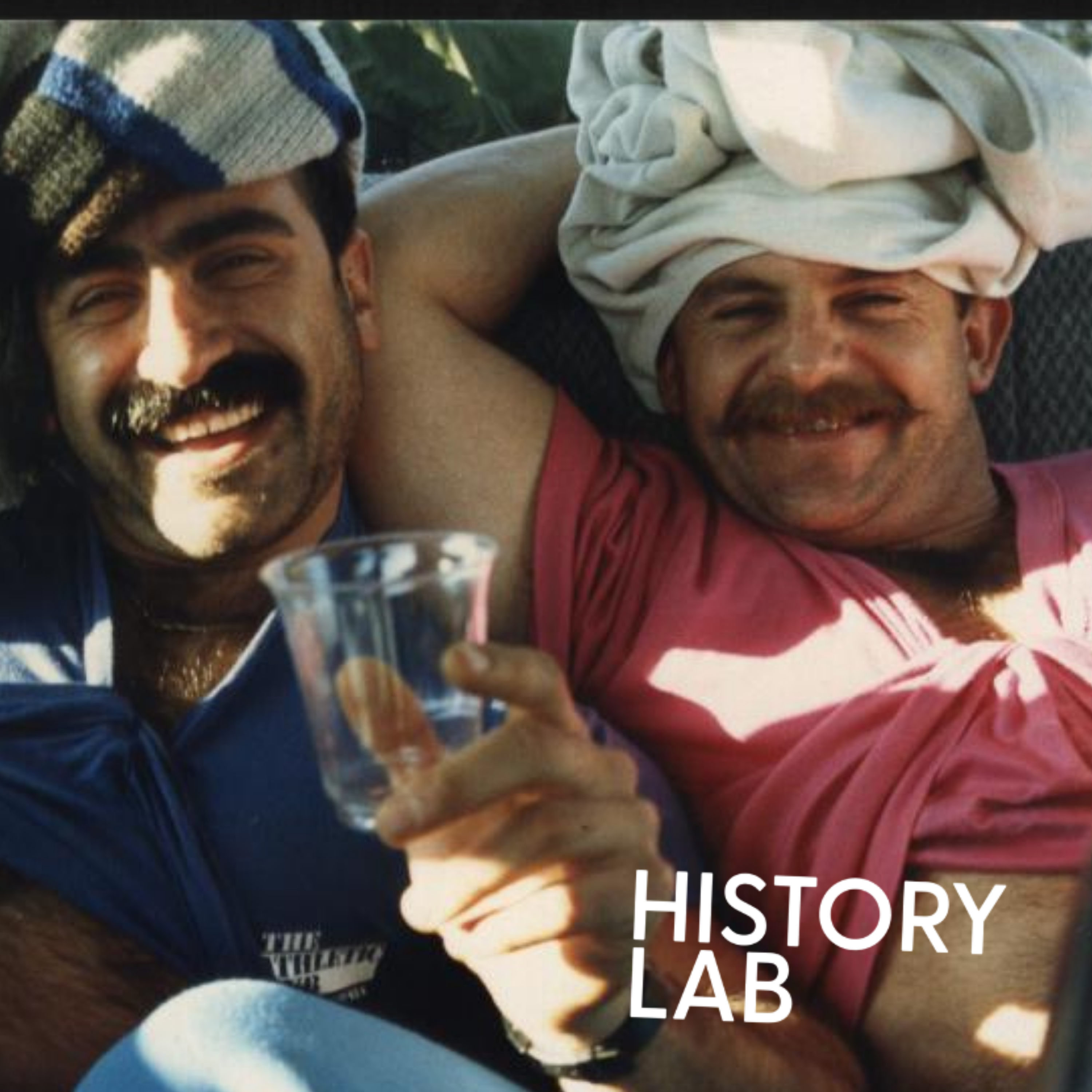
In the late 1970s and early 80s, Sydney’s Darlinghurst was the place to be for queer fun, sex and joy – all bubbling alongside a measure of danger.
Packed bars, late-night gyms, house music, new friendships and the thrill of seeing and being seen. For many, this was the place to connect, to belong, to “grow up under the mirror ball.”
In the first episode of this three-part series, historian Leigh Boucher steps into that world of parties, cruising, chosen families and hard-won freedom — a queer neighbourhood alive with possibility.
But as the music plays and the nights stretch on, whispers of a mysterious illness begin to circulate.
To understand how that powerful, fragile world of Darlinghurst felt and moved, Leigh talks to ordinary people who lived there and built the “gaybourhood” from the ground up.
How might their stories help us to a fresh understanding of a history we think we know?
Voices
Narrator: Regina Botros
Historian: Leigh Boucher
Interviewees: Pierre Touma, Sara Lubowitz, Bruce Carter, Gary Dunne, Lizzie Griggs, Tess Ziems and Frank McCabe.
Archive: Dr Jim Curran and Dr Ron Penny (courtesy of Gaywaves, 2SER)
Archive voice actors: Sam David Harris and Michael J Ryan.
Radio news and current affairs archive from Gaywaves, 2SER.
This special History Lab Original series was created on the lands of the Gadigal people of the Eora nation.
Produced, written and narrated by Regina Botros, in collaboration with Macquarie University historian Leigh Boucher.
Story development by Leigh Boucher and Michelle Ransom-Hughes.
Interviews by Leigh Boucher.
Research assistance from Eli Branagh.
Story and script editing by Sarah Gilbert.
History Lab is a UTS Impact Studios production, in collaboration with the Australian Centre for Public History at UTS.
Support
This podcast was made with the support of the support of the Paul Ramsay Foundation and is part of the Foundation’s Darlinghurst Public History Initiative, a collaboration with UTS’ Australian Centre for Public History and Impact Studios.
Thanks to Macquarie University for its support of this series.
A special thanks goes to the staff and management of City Gym, Darlinghurst, for their generous hospitality.
EPISODE 0
Introducing: Darlinghurst’s AIDS Crisis
Australia’s response to HIV and AIDS is often remembered as a national success story — one shaped by public health policy, activism and community action.
But how does that history change when you zoom in close?
Darlinghurst’s AIDS Crisis is a three-part History Lab Original series with historian Leigh Boucher.
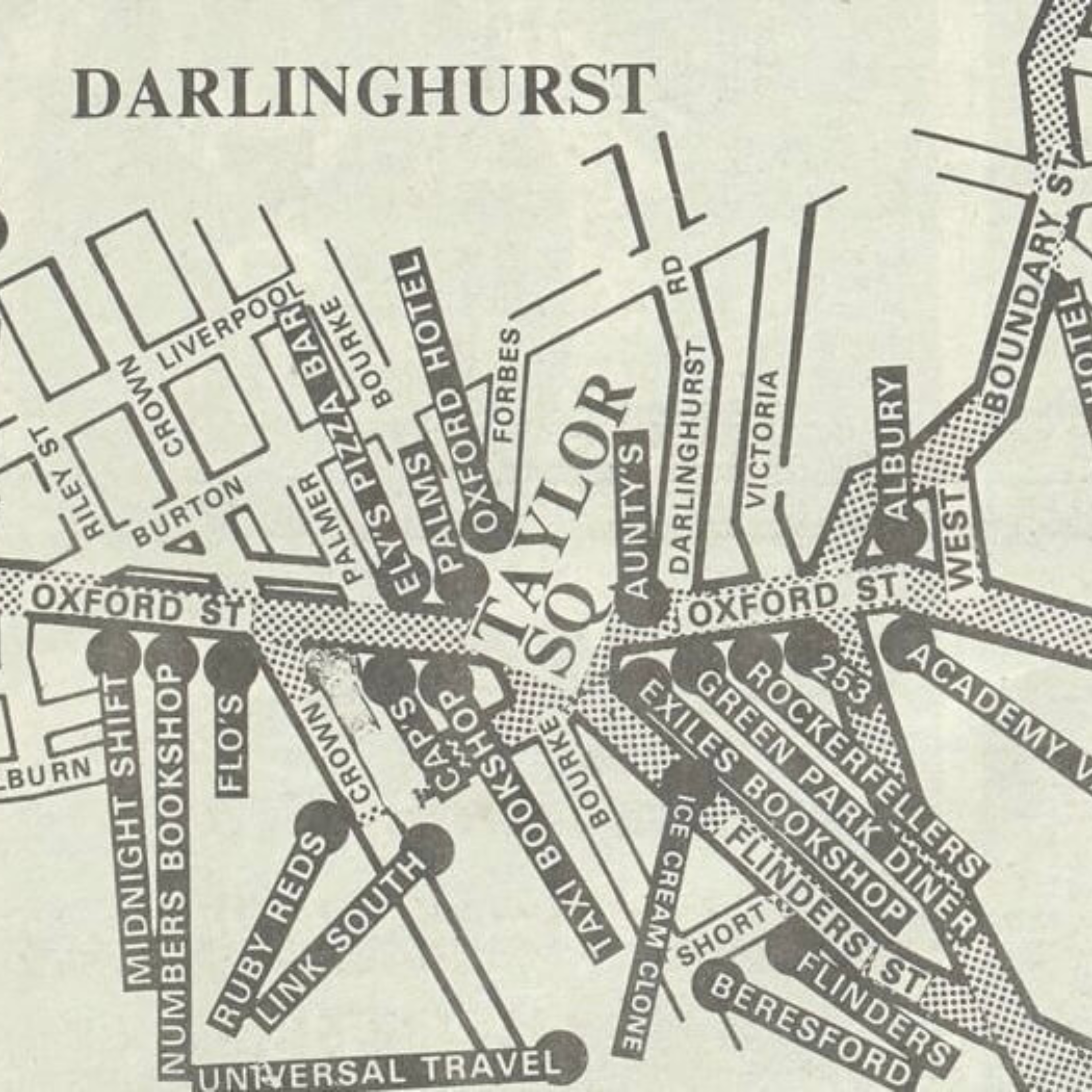
Focusing on the Sydney neighbourhood at the centre of the epidemic, the series traces how the crisis was lived day by day — through friendships and care networks, and in the hospital wards, gyms, bars and streets of Darlo.
Hearing the stories of ordinary people, many of them sharing their stories for the first time, you’ll discover how their voices help us revisit this familiar history, and make it anew.
