

History Lab
Season 7
Episode 4
Caribbean Echoes: Susannah Andrews – Jamaican Matriarch to Footy Legends and Mining Startups
 5.0
0 MIN
5.0
0 MIN


- Synopsis
- Credits
What connects a VFL “Champion of the Colony” to a woman born enslaved in Jamaica?
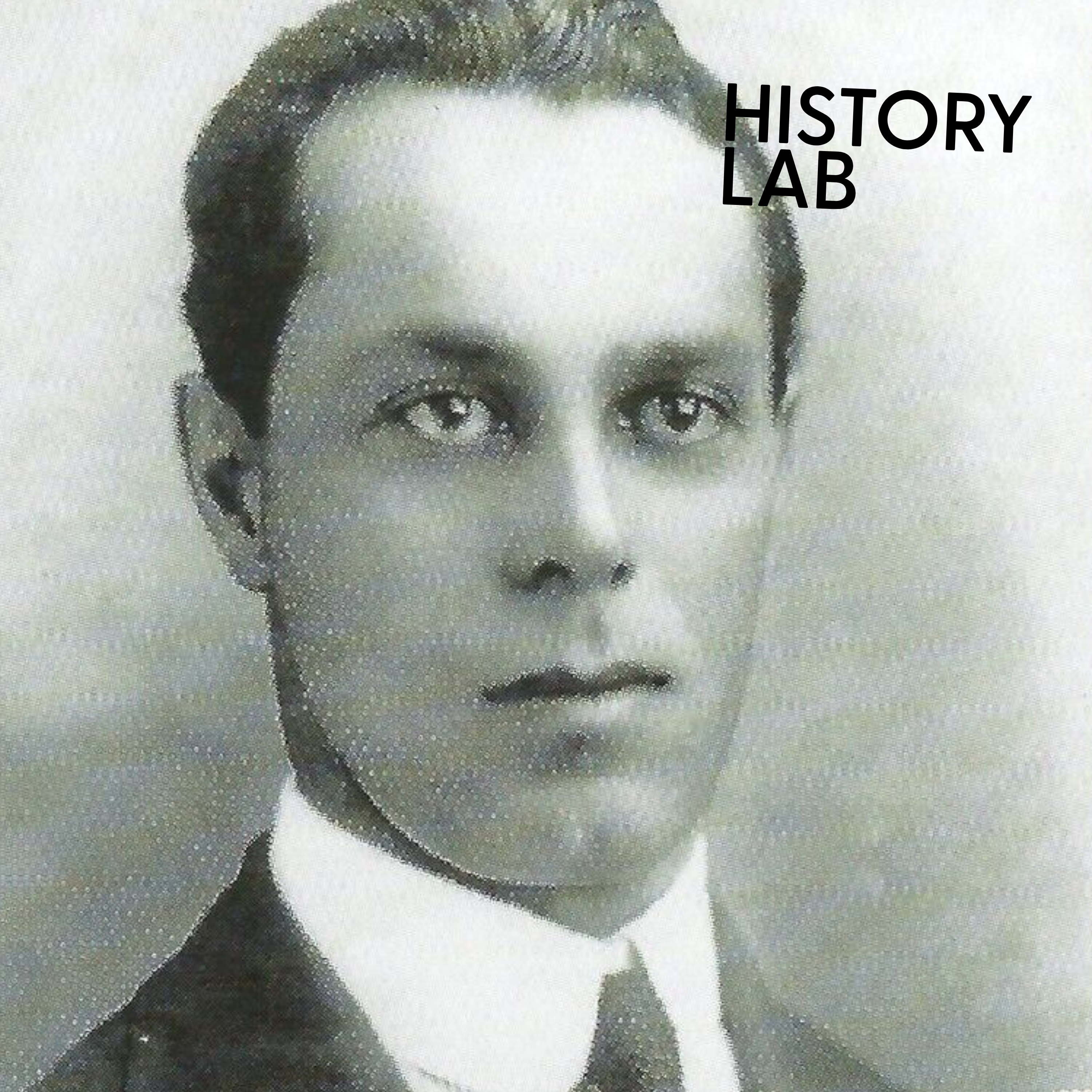
In 1919, Richmond footballer Vic Thorp won the league’s highest honour for the second time — the equivalent of today’s Brownlow Medal. But just a century earlier, his great-grandmother Susannah Andrews was enslaved in Jamaica, before gaining her freedom.
This episode uncovers Susannah’s remarkable journey: from enslavement, to freedom, to becoming matriarch of an Australian family that would include football legends and mining startups.
We hear from her descendant Garry Chapman, who discovered Susannah’s story while sifting through his father’s papers.
Jamaican historian Suzanne Francis-Brown — a regular on the BBC’s Who Do You Think You Are? — helps us reconstruct Susannah’s life as an enslaved, then free, woman living with a Jewish merchant in Kingston.
So how does one woman’s survival ripple through generations?
And why does remembering Susannah’s life matter for how we tell Australian history today?
Voices
Garry Chapman taught in both primary and secondary sectors and worked in both government and independent schools over a career of 42 years. He is the author of over 50 published books, written for children and teachers. Garry developed an interest in his own family’s history when he found a folder full of notes in his late father’s belongings. It contained a photo of his great great grandfather, George Brydon Brandon with ‘Jamaica?’ written on the back. This planted a seed, and Garry has spent the ensuing years trying to fill in the missing pieces of his ancestors’ stories, uncovering the fascinating tale of Susannah Andrews in the process.
Historian Dr Suzanne Francis-Brown has worked as a journalist, lecturer in media and communications and museum curator. Her research interests include heritage interpretation, enslaved families, and enslaved runaways in Jamaica, and she has published Mona, Past and Present: The History and Heritage of the Mona Campus, University of the West Indies (2004) and the co-authored The Old Iron Bridge, Spanish Town, Jamaica, (2005), as well as several works of youth fiction. She was curator at the University of the West Indies Museum from its founding in 2012 to 2019. Dr Francis-Brown has featured many times on the BBC’s Who Do You Think You Are?
Credits
This series was produced on the lands of the Gadigal people of the Eeora Nation and Burramatagal people of the Dharug nation.
Narrator, writer, and producer: Sienna Brown
Sound recordist, writer, and producer: Ben Etherington
Supervising producer: Jane Curtis, UTS Impact Studios
Executive producer: Sarah Gilbert, UTS Impact Studios
Sound designer and engineer: John Jacobs
Support
The research for this series was funded by the Australian Research Council Discovery Project Creole Voices in the Caribbean and Australia: Poetics and Decolonisation (DP220101256).
We are also grateful to the Writing and Society Research Centre and School of Humanities and Communication Arts at Western Sydney University for their generous support in the production of this series.
Podcast playlist

EPISODE 6
Caribbean Convicts
Caribbean Convicts weaves together the story of the Caribbean men who arrived in Sydney onboard the convict ship the Moffatt on August 30, 1836. Most had been enslaved, including William Buchanan, a Jamaican man transported for participating in the Christmas Day slave uprising in Jamaica in 1831-32.
Join historical novelist Sienna Brown as she explores the diverse fates of Buchanan and the other men who arrived that day. As they fanned out across the country, some became bushrangers, others stalwarts of the community, but they all worked hard to make a new home for themselves.


EPISODE 5
Caribbean Echoes Live with Zahra Newman and Alana Valentine
In this special episode of Caribbean Echoes, series producers Ben Etherington and Sienna Brown are in conversation with star Jamaican-Australian actress Zahra Newman and acclaimed playwright Alana Valentine.
They discuss the making of the series and how performance emerged as a key theme across it. Zahra reflects on being a Black Caribbean-Australian actor today, and the persistence of the racial politics that afflicted earlier generations of Caribbean immigrants.
Alana takes us through the joys of bringing Nellie Small, the subject of Caribbean Echoes episode 3, back to the stage in her cabaret Send for Nellie! And we hear about Nellie’s solidarity with Indigenous performers.
The panel also talks bloopers and highlights from their performing careers in this conversation recorded in a packed room at the Abercrombie Hotel in Sydney on October 23, 2025.

EPISODE 3
Caribbean Echoes: Nellie Small – Queer Black Caribbean-Australian Icon
Who was the Caribbean-Australian cabaret star who could bring down the house — and come back at racism with a joke?
“Come sit by me, we don’t eat people anymore.”
Nellie Small was born in Sydney in 1900, just before the White Australia policy was introduced.
She became one of the country’s most beloved performers, famous for wearing men’s suits on stage and off, and for her sharp comebacks.
In show business circles around Sydney in the 1940 and 50s, the phrase was: “When a show’s not strong enough — send for Nellie!”
“I’m proud of my Australian birth. But I’d be much happier if more of my fellow countrymen would forget my skin colour is different from them.”
Negotiating Australia’s vexed racial politics, Nellie carved out a public space for Black music and queer performance in 1950s Australia. We explore her career and uncover the previously unknown stories of her Caribbean forebears.
Nellie Small is played by Jamaican-Australian actor Zahra Newman.
